Can You See Yourself Doing This at 55? A Smarter Way to Choose a Weight Loss Plan
A Midlife Weight Loss Evaluation Series
If you’re over 40 and trying to lose weight, you're not lacking effort. You're probably overwhelmed by the choice of methods:
Intermittent fasting.
Low-carb.
Counting calories.
Macros.
Intuitive eating.
GLP-1 medications.
Each one promises something slightly different, each one has passionate supporters, and each one sounds reasonable, until it doesn’t.
And when the weight comes back — or the plan becomes exhausting — most women assume they failed.
But often, the method failed them.
So instead of asking, “Which one works?”
I want you to ask a better question:
Can I see myself doing this at 55 (or longer)?
Not for six weeks.
Not until vacation.
Not until I lose 15 pounds.
At 55.
Because the issue most women over 40 face isn’t discipline.
It’s burnout.
You’ve restricted. You’ve cut carbs. You’ve skipped meals. You’ve white-knuckled calories. You’ve tried to eat intuitively after years of dieting. And every time you had to start over, it felt personal.
In this series, I’m not here to criticize any method. I’m not here to blindly praise any method either.
I’m here to evaluate them calmly and clearly.
The Four Questions We’re Using in This Series
Every method we talk about will be evaluated through the same lens:
Is it sustainable?
Is it flexible — can I eat foods I enjoy?
Does it have an exit strategy?
Do I understand how it actually works?
Because if a plan doesn’t teach you how to maintain your results, it isn’t a lifestyle.
It’s a phase.
And women in midlife don’t need another phase.They need something they can build on.
If you’re tired of conflicting advice and tired of starting over, this series is for you.
And if at any point you’d rather talk through your situation personally, that’s what coaching calls are for.
You don’t have to untangle it alone.
Method #1: Calories-Only Tracking
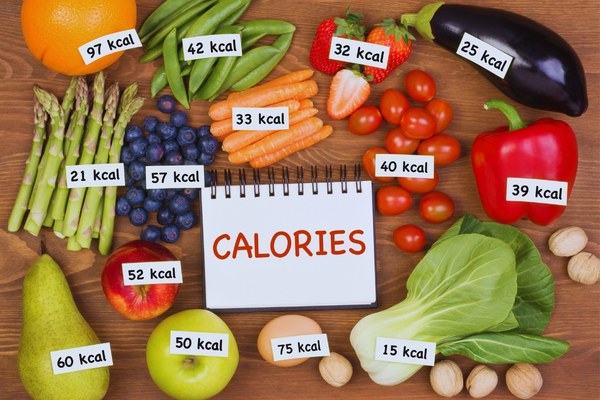
Let’s start with something neutral: counting calories.
Almost everyone understands it. It feels logical. It feels scientific. And it does work. But let’s walk through it.
Why Women Try It
Most women turn to calorie tracking because it feels measurable and objective.
There’s comfort in numbers.
No food rules.
No forbidden food groups.
Just a daily target.
It promises simplicity: “If I stay within my calories, I’ll lose weight.”
And from a basic physiology standpoint, that’s true.
How It Works
All weight loss ultimately comes down to energy balance.
If you consume fewer calories than your body uses, your body pulls from stored energy — including body fat — and weight decreases. Calorie tracking creates awareness and often creates a deficit.
But here’s what it doesn’t account for automatically:
Protein intake
Muscle preservation
Hormonal changes after 40
Hunger regulation
Food quality
Long-term adherence
It measures quantity, not composition. And that matters more in midlife than it did at 25.
The 55-Year-Old Test
Let’s evaluate it using our framework.
1. Sustainability
Short term? Often yes.
Long term? It depends.
Many women can track for months, but few want to track forever. Tracking every bite indefinitely can become mentally exhausting, especially for women who already feel hyper-aware of food.
If tracking creates stress or obsession, sustainability drops.
2. Flexibility
Technically, calorie counting is flexible. You can eat anything, as long as it fits your calorie budget.
But here’s where women over 40 often struggle:
If calories are low and protein is not prioritized, hunger increases.
Energy drops.
Cravings intensify.
And then it stops feeling flexible. In fact, it starts feeling restrictive even if no food is technically off-limits.
3. Exit Strategy
This is where calorie-only tracking often falls short.
If someone loses weight by simply eating fewer calories — without understanding protein needs, muscle retention, or maintenance strategy — what happens when they stop tracking?
Many women return to previous habits.
Calories increase.
Weight returns.
They assume they lack willpower.
But the plan didn’t teach them how to maintain.
It taught them how to restrict.
4. Understanding
Here’s an important question: Do you understand why your calorie target is set where it is? Or did an app generate it and you followed instructions?
If you don’t understand the following:
How metabolism adapts
Why protein matters
Why muscle protects long-term fat loss
How to increase calories safely later
Then you’re outsourcing control. And long-term autonomy matters.
Who It Might Work Well For
Calorie tracking can be helpful for:
Women who like data
Women who want initial awareness
Women who have never measured intake before
Women comfortable with numbers
It can create valuable insight. But insight alone isn’t a full strategy.
Where Women Over 40 Tend to Struggle With It
This is what I see most often:
Undereating protein
Losing muscle alongside fat
Setting calories too low
Ignoring strength training
Treating the calorie number as the only metric
After 40, muscle preservation is non-negotiable.
Muscle protects metabolism.
Muscle supports hormones.
Muscle improves insulin sensitivity.
Muscle changes body composition.
Calories alone don’t ensure muscle retention.
And that’s where many women unintentionally make things harder long-term.
So… Can You See Yourself Doing This at 55?
If tracking calories helps you build awareness and skill, it can be a useful tool.
If it becomes a lifelong mental burden, it may not pass the test.
No method is magic.
The right method is the one that:
Builds understanding
Supports muscle
Teaches maintenance
And doesn’t burn you out
In the next post, we’ll look at low-carb and keto, and why they’re especially popular with women over 40 — and where they tend to create friction long-term.
If you’re already feeling overwhelmed by options, you don’t have to figure it out alone.
You can always reach out.
You deserve a strategy that works when you're 55 and beyond.